Kevin Garnett didn't just play basketball—he interrogated it. Every possession was a question he demanded an answer to, and woe to anyone who replied softly. I remember watching him during the 2004 Western Conference Finals, arms extended like a man trying to hold back a crowd, barking instructions at teammates who were already in position. The Timberwolves lost that series to the Lakers, but Garnett's ferocity left a residue. You could feel it through the screen. That's the thing about Garnett: his impact never showed up neatly in a box score. It lived in the spaces between plays。in the way he turned a routine defensive rotation into a personal crusade.Drafted fifth overall in 1995 straight out of Farragut Academy in Chicago。
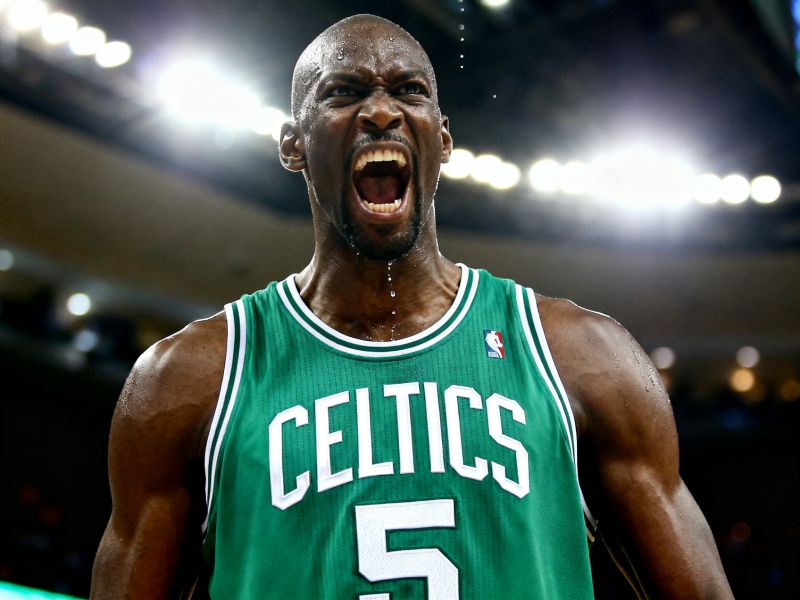
Garnett became the first player in two decades to jump from high school to the NBA. The gamble paid off—not just for him, but for the league. He was a 6-foot-11 forward who handled the ball like a guard, shot fadeaways like a wing, and defended all five positions before that phrase became fashionable. His 2003-04 MVP season remains a masterclass in carrying a franchise: 24.2 points, 13.9 rebounds, 5.0 assists, and a Minnesota team that had no business winning 58 games. Garnett didn't lift his teammates by making them comfortable. He lifted them by making them accountable.The 2007 trade to Boston changed his legacy. Teaming with Paul Pierce and Ray Allen, Garnett finally had a supporting cast worthy of his intensity. But he didn't mellow—he sharpened. The 2008 Celtics won 66 games and a championship, and Garnett's defensive player of the year award that season felt like a correction for years of overlooked brilliance. I still think about his pregame ritual: head-butting the basket stanchion, then retreating to the corner to mutter to himself. It wasn't theater. It was a man steeling himself for war. Doc Rivers once said coaching Garnett was like coaching a second coach who never stopped yelling.What separates Kevin Garnett from other greats is the uncomfortable truth he embodied: greatness isn't polite. He alienated some teammates. He crossed lines with opponents. His trash talk had a cruel edge. But watch the 2012 Eastern Conference Finals against Miami—Garnett at 36, guarding LeBron James for stretches, scoring 26 in Game 5. That wasn't nostalgia. That was defiance. He finished his career with 15 All-Star selections, nine All-Defensive first teams, and a 2008 ring。but the numbers undersell him. The real measure is how many players today credit him for showing them what professional preparation looks like. That's a quieter legacy, but no less real.Kevin Garnett retired in 2016。and the NBA hasn't quite replicated his particular strain of fury. The modern game prizes spacing and pace, and Garnett would have thrived in it—his midrange jumper, his switchability, his passing. But he'd also have hated the AAU-fication of player relationships, the Instagram posts after losses. He believed in friction. He believed that comfort was the enemy. Maybe that's why his intensity felt like a gift even when it was exhausting. He made you feel every possession mattered. That's not a skill. That's a philosophy, and Kevin Garnett lived it without apology.