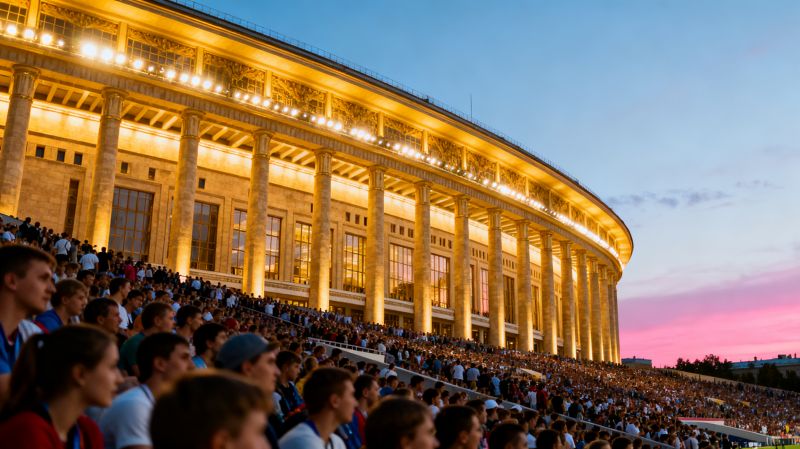
he 2018 World Cup schedule opened at Moscow's Luzhniki Stadium on June 14 with Russia beating Saudi Arabia 5-0, and it finished in the same building 31 days later when France took the final 4-2 against Croatia. Between those two dates sat 64 matches。32 teams, 11 host cities and 12 stadiums, strung across five time zones from Kaliningrad on the Baltic coast to Yekaterinburg on the Asian side of the Urals. That spread is what made this calendar genuinely difficult to follow. A supporter in Saransk could watch a lunchtime kickoff that a supporter in Kaliningrad would only see at breakfast, and both were sitting in the same country watching the same tournament. Roughly 3 million tickets were sold for a competition that asked fans, and players, to treat a landmass the size of a continent as a single venue.
Group play ran June 14 to June 28。fourteen days of three or four matches per day, every kickoff pegged to Moscow clocks. The final round of group games started simultaneously in each group, a long-standing anti-collusion rule that produced real chaos: Germany's exit against South Korea in Kazan, Argentina scraping past Nigeria in Saint Petersburg, Spain and Portugal both needing late goals. The 2018 World Cup schedule never hid its geography. Croatia's group stage took them from Kaliningrad to Nizhny Novgorod to Rostov-on-Don, close to 4,000 kilometres of flying in ten days before the knockouts even began. England, based in Repino outside Saint Petersburg, still had to fly to Volgograd for a group game against Tunisia. Serbia trained on the Baltic and played in Samara. Senegal's group sent them from Moscow to Yekaterinburg, a hop of nearly 1,800 kilometres east. Base camps helped, but nobody avoided the planes, and it showed on the pitch in heavy legs and cautious second halves.The knockouts tightened fast. Round of 16 ties ran June 30 to July 3, quarter-finals on July 6 and 7, semi-finals July 10 and 11 in Saint Petersburg and Moscow, the third-place match on July 14, and the final on July 15 back at Luzhniki. Three days between matches became the norm, four if the draw was kind. Croatia were not lucky. They needed penalties against Denmark, penalties against Russia and extra time against England。playing 360 minutes of knockout football in eleven days with a squad leaning hard on Luka Modrić and Ivan Perišić. The 2018 World Cup schedule offered no cushion there. France, by contrast, closed out Belgium in normal time and had a full extra day before the final. That gap is not decisive on its own, but it is not nothing either.Kickoff times deserve their own paragraph. Matches were slotted into early afternoon, late afternoon and evening windows, which suited European television and punished anyone watching from Asia or the American west coast. Afternoon games in Volgograd, Sochi and Nizhny Novgorod ran in temperatures near 30°C。
which is why referees started calling cooling breaks around the half-hour mark of several fixtures. Coaches rotated more than they wanted to. Substitutions came earlier. A handful of group games turned into walking-pace contests after the 70th minute. This was also the first full VAR rollout at a World Cup, and review stoppages added minutes nobody had budgeted for, stretching some matches past 100 minutes of real time.The calendar did more than organise a month of football. It proved a World Cup could be staged across a huge, thinly connected territory and still pull record viewing figures, and it handed FIFA hard data on how kickoff windows shape global audiences. When the 2022 tournament shifted to November and December to dodge Qatar's summer heat, and when 2026 expands to 48 teams and 104 matches across the United States, Canada and Mexico, the planning leaned on what Russia's 31 days revealed about travel, rest and recovery. For anyone who watched that summer closely。
the 2018 World Cup schedule remains a useful reference point: sprawling, occasionally unfair, and oddly compelling because of it.